
Cuba has a troubled recent history. After Fidel Castro, with the help of Che Guevara, took heroically (but illegally) the power from the dictator general Baptista in 1976, he himself became a dictator (there is no democracy in Cuba) and operated a ‘rapprochement’ with the communist URSS Soviet Union. His anti-capitalist politics put his country in a delicate position during the Cold War, against the American capitalism, despite of the geographic location. This is not a blog about politics but I like to do a bit of historical research and I had the opportunity to discuss with locals what they think about their situation. Education, accommodation in foyer, food ration, health are pretty much free. Salaries are fixed by the Government: between 12 and 25 US dollars per month, depending on the jobs. I talked to a doctor who has 30 years experience and makes now $62 a month. Not much… So, how to make more money? Money comes from abroad, from tourists. Fidel passed away in November 2016 and had left the power to his brother Raul Castro in 2008. Politics is a bit softer and there are more and more tourists, especially since Barrack Obama went to Cuba last year. Every job ‘tourism related’ is well paid. This doctor I was talking to managed to inherit a car and works as a taxi driver, he can this way manages to make about 30 dollars a day. Pretty much anyone who has a car is a taxi driver. And nobody wants to be a doctor anymore.
Some of the other changes that have appeared under Raul Castro’s ruling: personal phones and laptops are authorised since 2007. Internet access is possible since 2015 (I have been told, I could not verify this information). Here again, Internet is controlled by the Government: a passport is required to buy an internet card (about $2 per hour), and wifi places have been set up in public parks and squares. It does not always work and it is slow.
People cannot leave the country legally (they can however get tourist visas in a few countries (Russia, Indonesia, Iran, India and some African countries). But as they said, the most important is Land and Family. I believe Cubans start realising their freedom was stolen. They have been brainwashed for generations. Still today, there are only 5 TV channels, all under governmental control. Hero for a lot of people in the World, Fidel is hated in his own country, despite the numerous monuments erected for him. I did not know really what to expect, but I realised this politic model is a disaster.
On the other hand, kids are well educated. There is no illiteracy in Cuba. Also, it is very safe. Coming from Brasil, it is a fantastic feeling to be able to walk anywhere anytime without being worried.
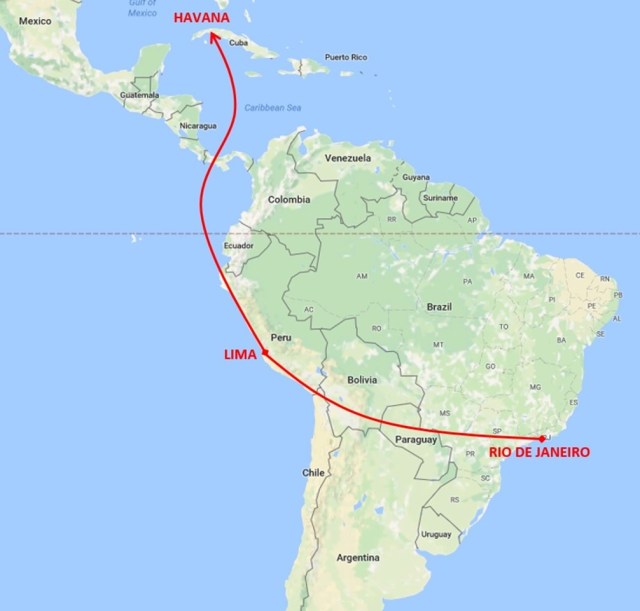
But let’s talk about me: after flying over the Andes and stopping over in Lima (Peru), I landed in Havana in the evening.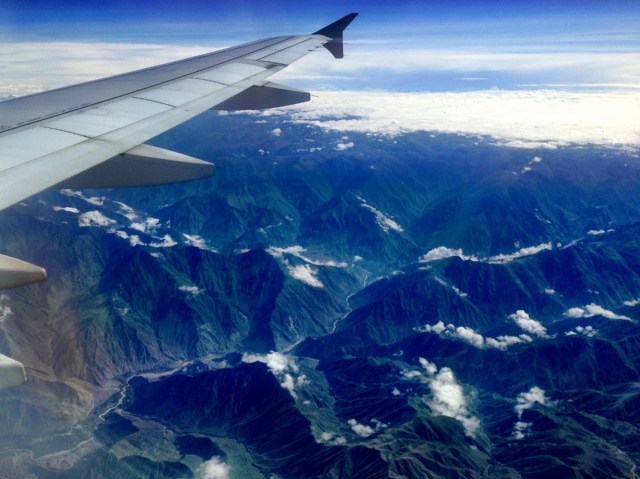

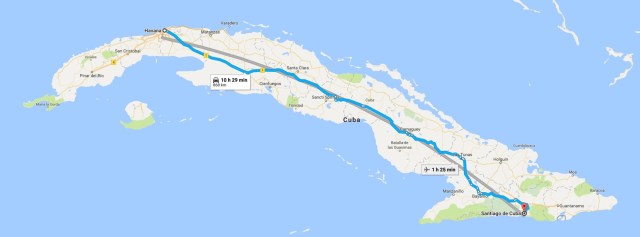
 I managed to find a shared taxi to drive down to the city of Santiago de Cuba, on the other side of the island. A 12 hours uncomfortably squeezed drive. But already, it feels like in the movies: palm trees and old cars: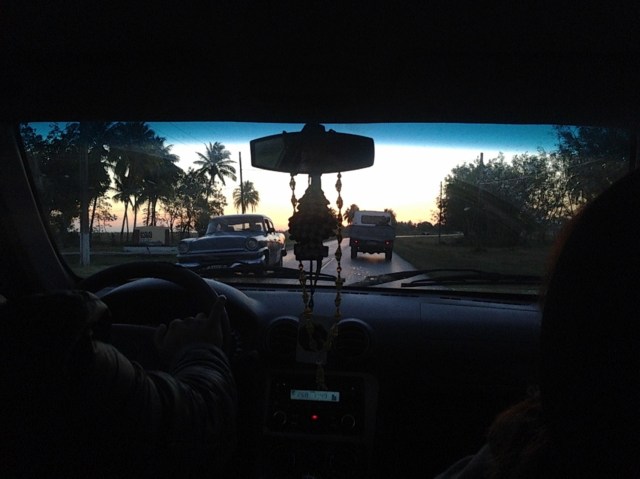
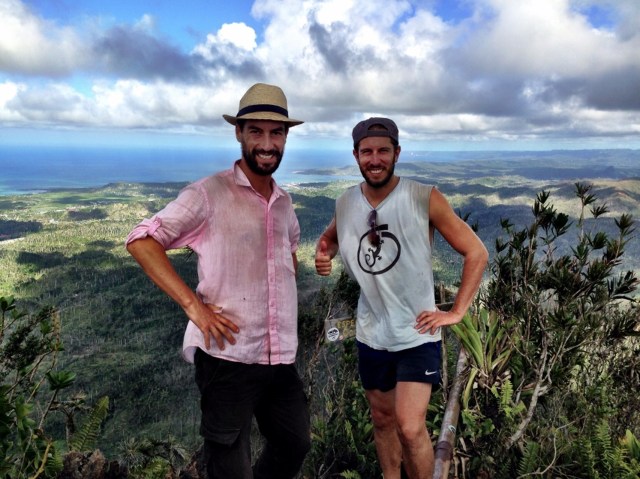
 Why Santiago? Because my good French friend Philippe was there. Philippe lived in Australia for nearly 10 years, we used to be flatmates in Darwin. He has been travelling the World for more than 2 years now, and we had caught up in Peru a few months earlier:
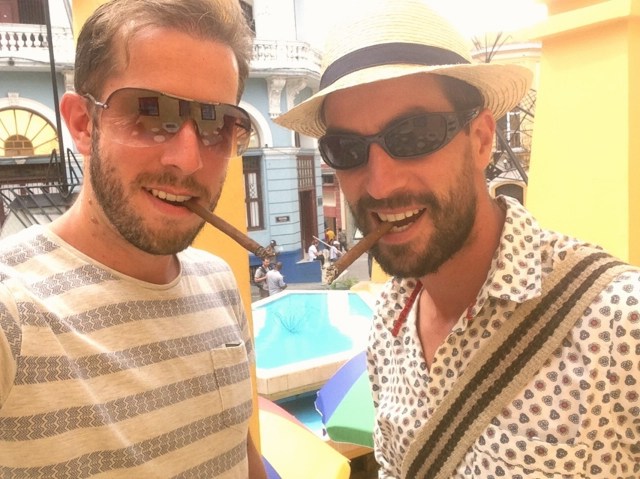 Cuba is the country of cigars and rum: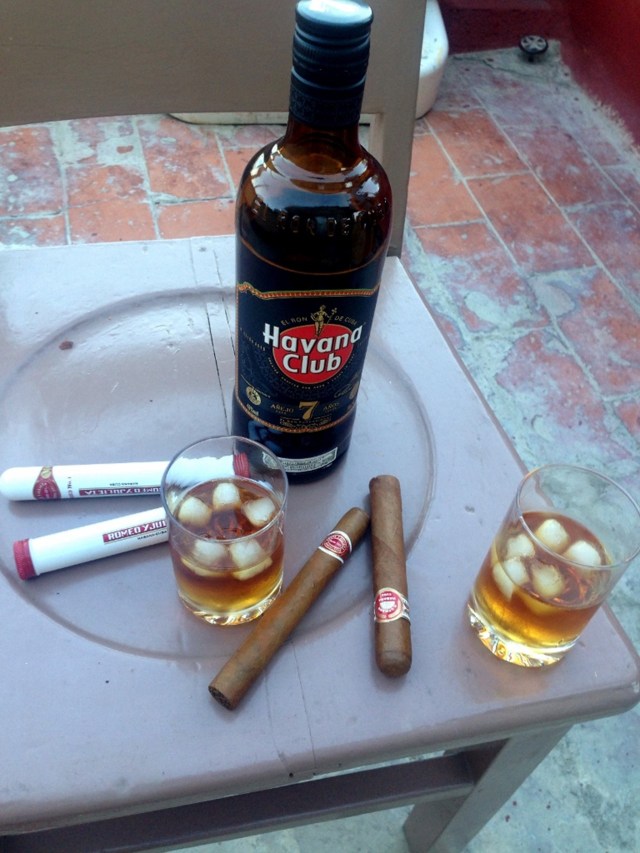
 The old Americans cars (Dodge, Pontiac, Chevrolet, Buick, etc…) makes us travel back in time.
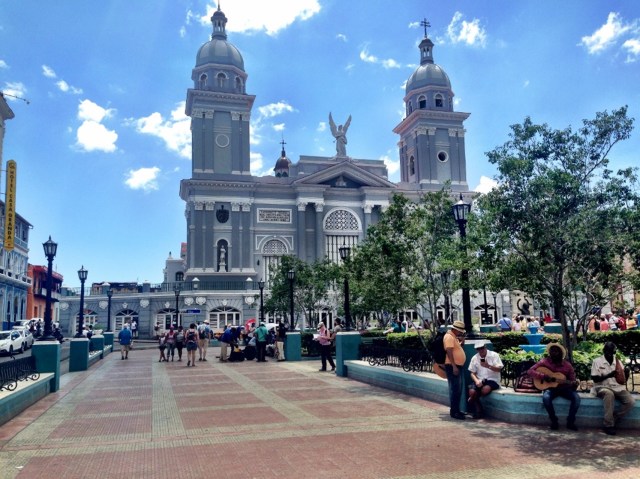
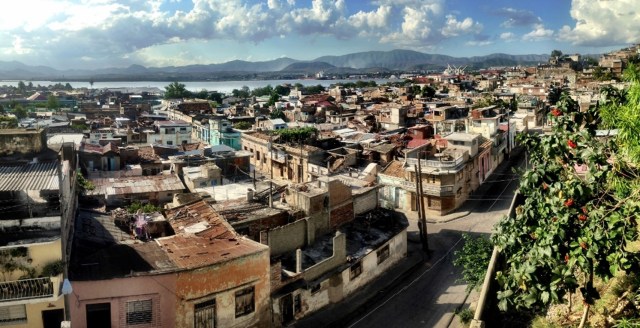
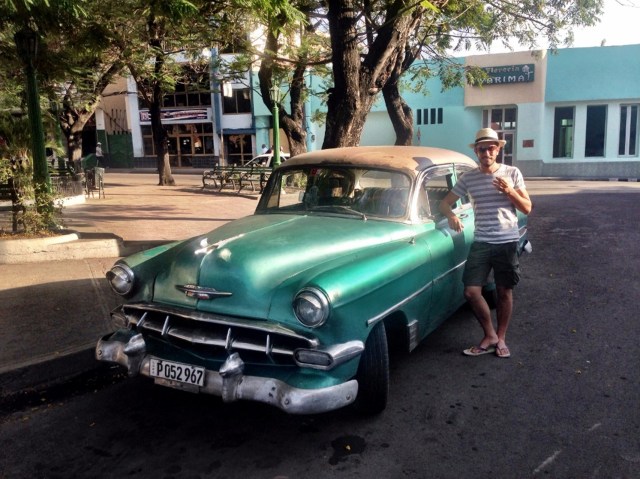 Santiago is the second city of Cuba (500,000 people) after the capital Habana. It is known as the Revolutionary city, the base from where Fidel Castro and Che Guevara organised the guerrilla.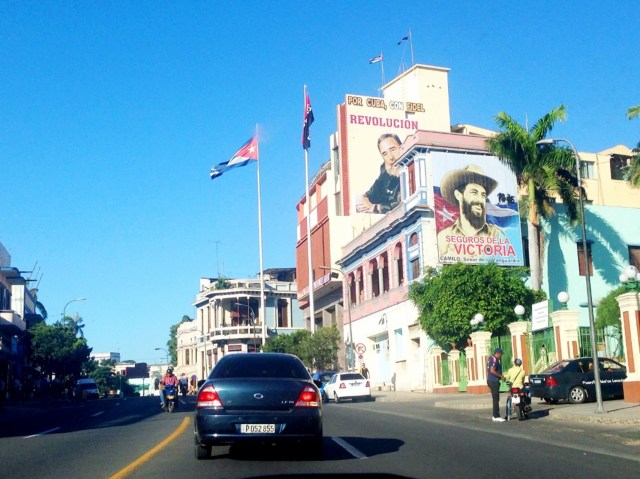
 Fishermen trying to sell this huge fish to restaurants:
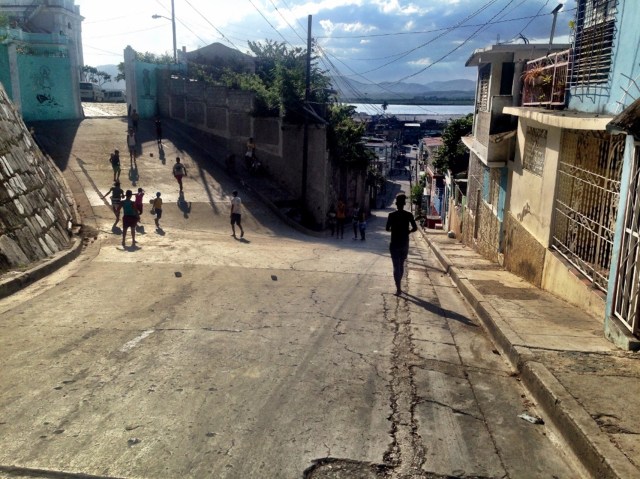
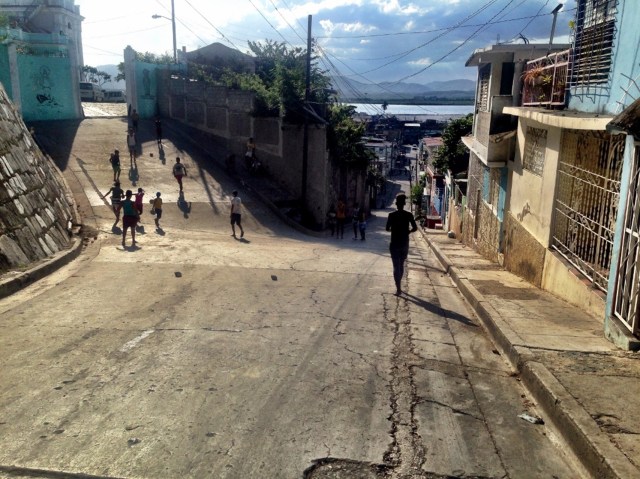
 Kids playing football in steep streets:
 After 2 days in Santiago, Philippe and I decided to go further East: Baracoa, a 4 hours drive in this old shitbox with no suspension: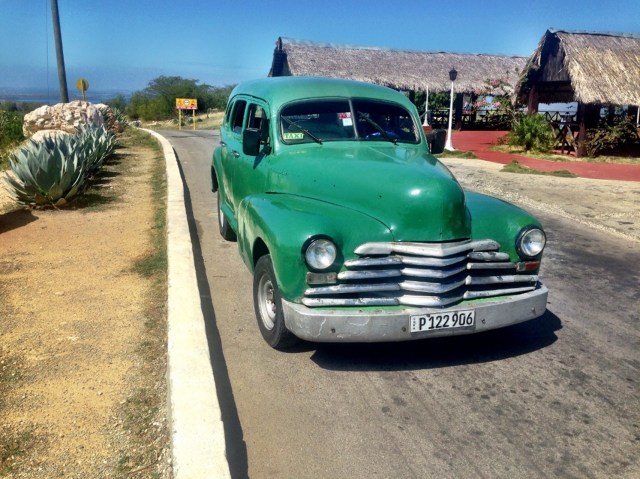
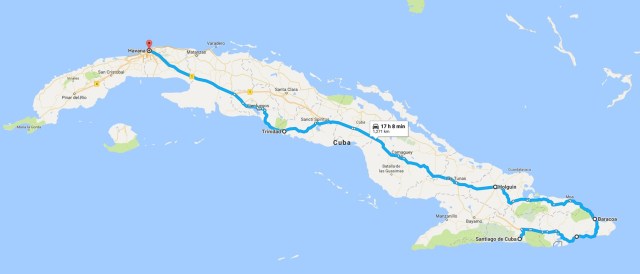 On the way, we stopped to have a look at the famous Guantanamo. Guantanamo is an American land on Cuba island. Some of the prisoners were detained in rudimentary conditions there and Obama closed the prison. It is however a military base strategically well position on the Caribbean bay. It is on the very far left of the picture below, but very hard to see something without binoculars:
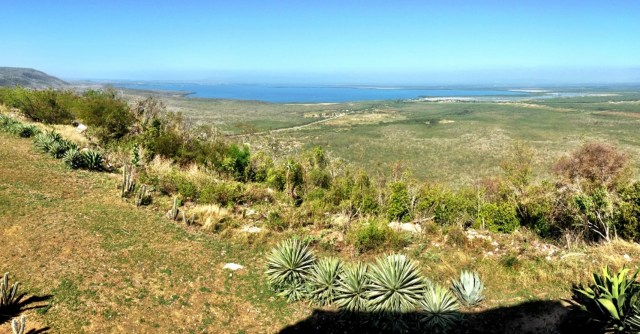 Baracoa is a small lovely city. My favourite in Cuba. Because it is remote, there aren’t many tourists there.
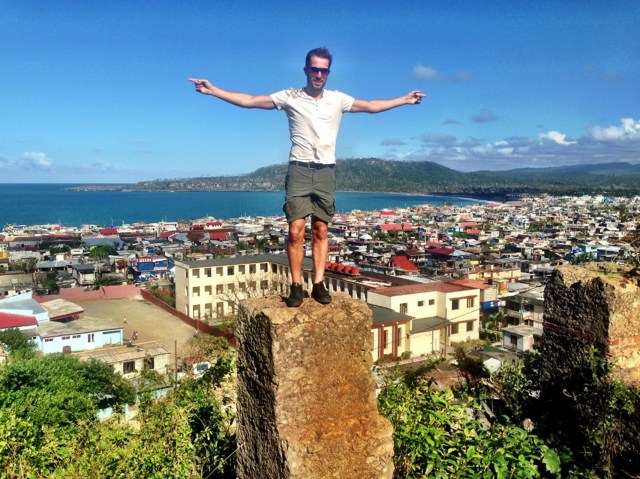 With Philippe we went for a few hikes and walks around. We met this poor family who welcomed us in their home for fruit and coffee:
 Grandpa who showed us the way, we had a good laugh: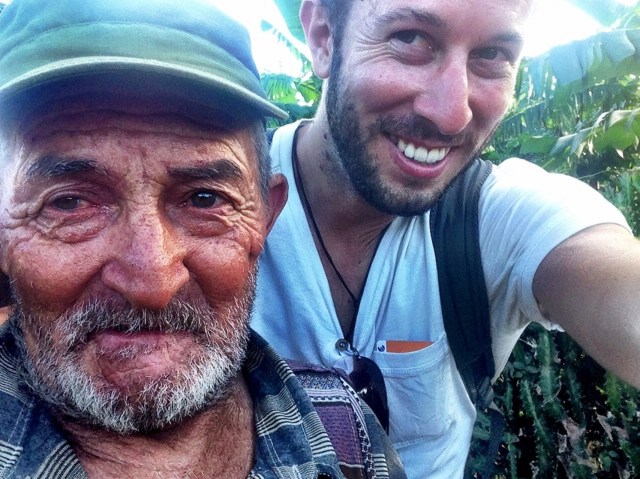
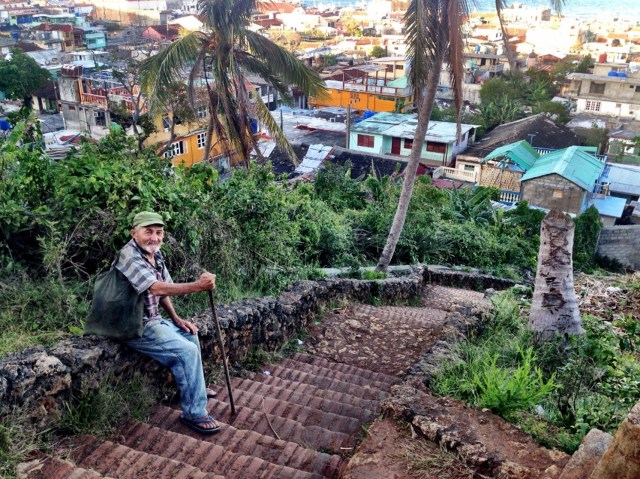 A nice view on Baracoa bay: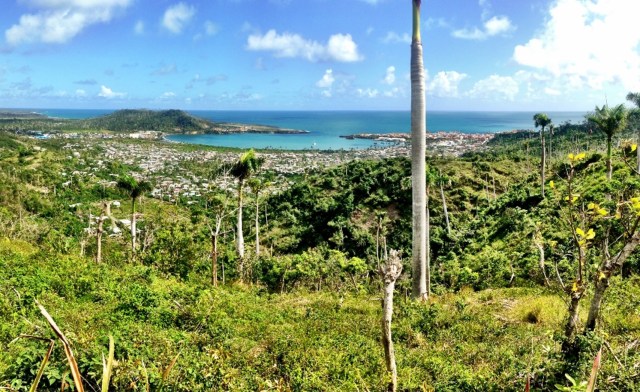
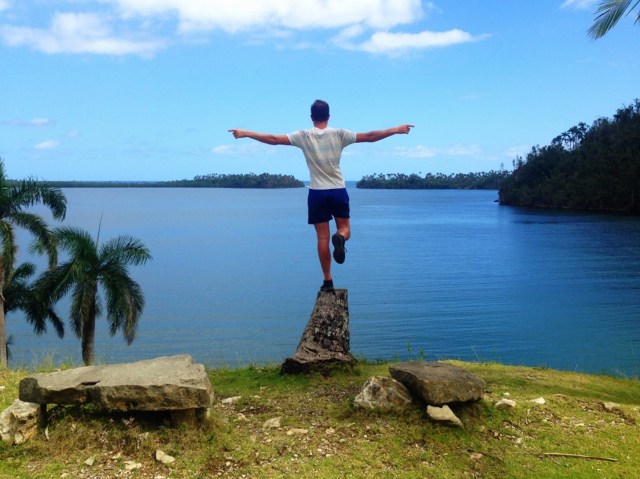 The flat square mountain on the horizon is called ‘Loma El Yunque’, 560m above the sea level and our objective of the day:
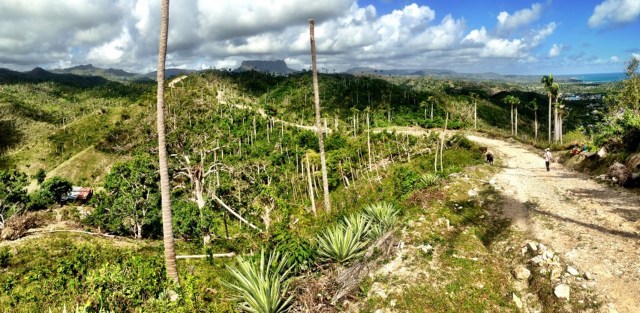 To get there, we had to cross rivers on barges or swimming: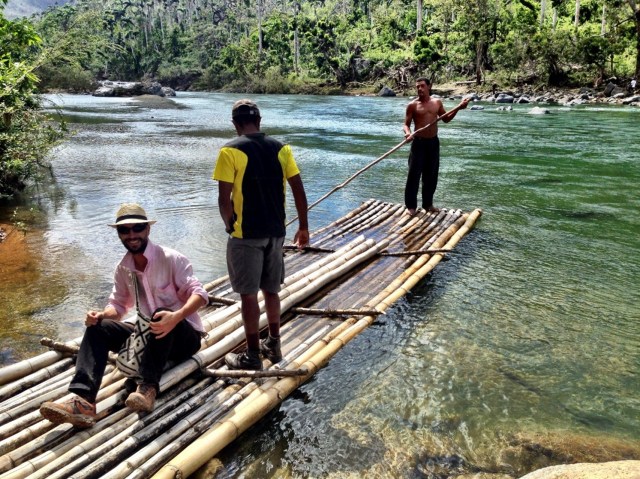
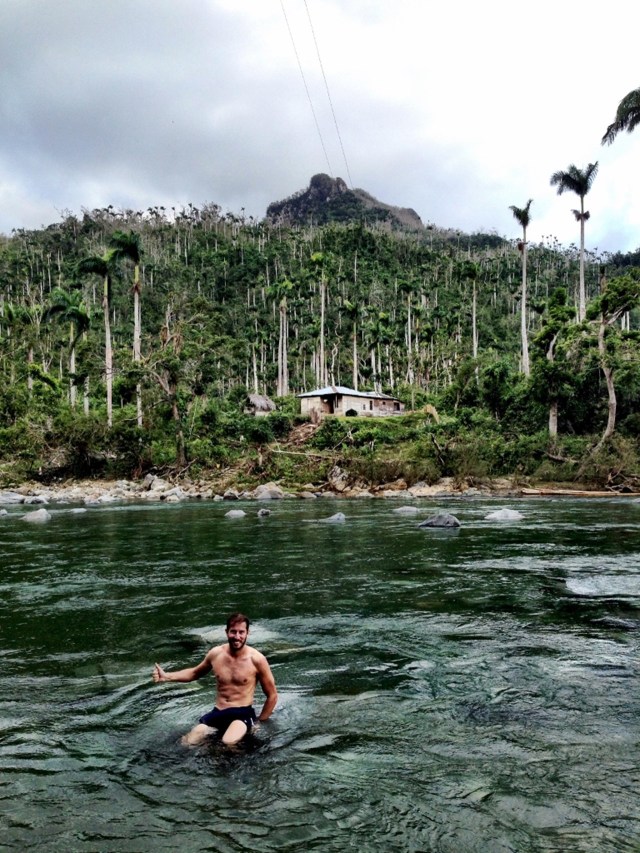
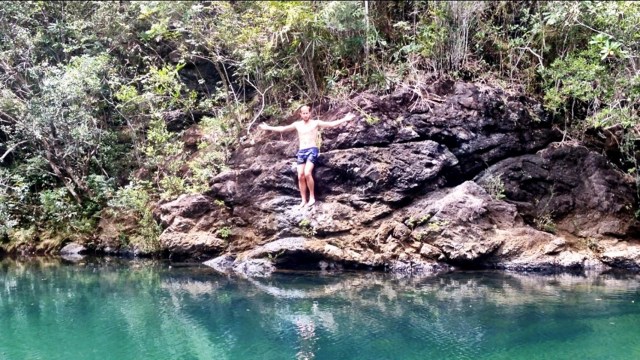 A bit of a climb:
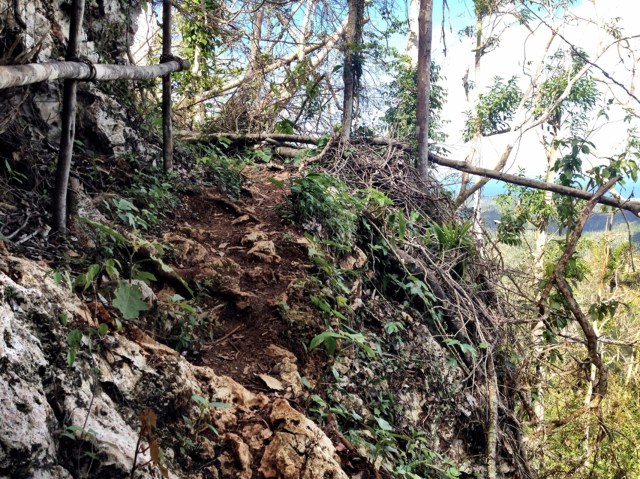 And we enjoyed the beautiful views at the top: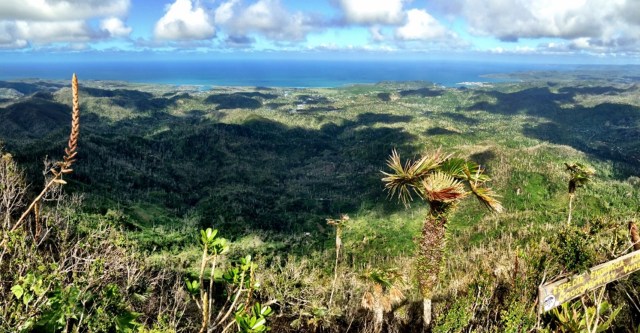
 In some other hikes, we saw the smaller frog in the World. This is adult size: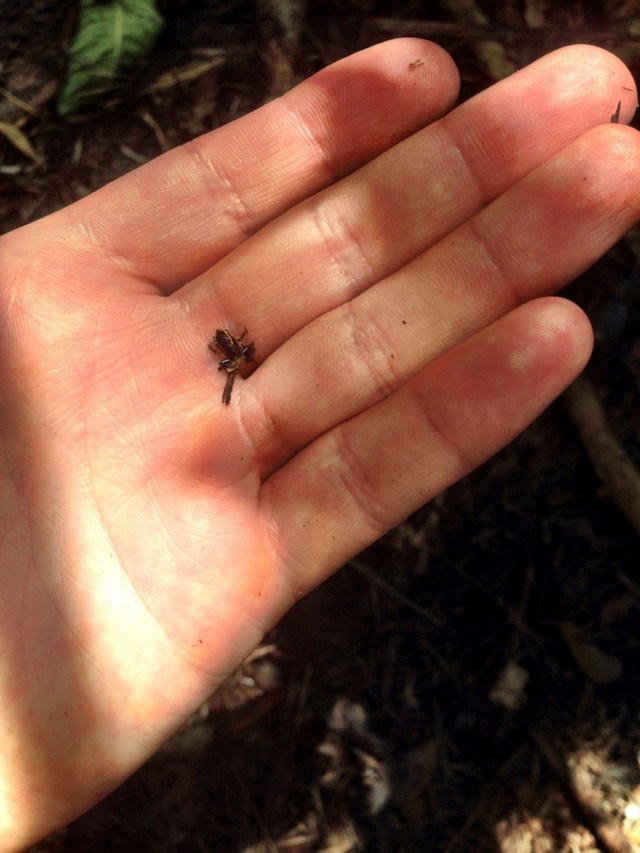
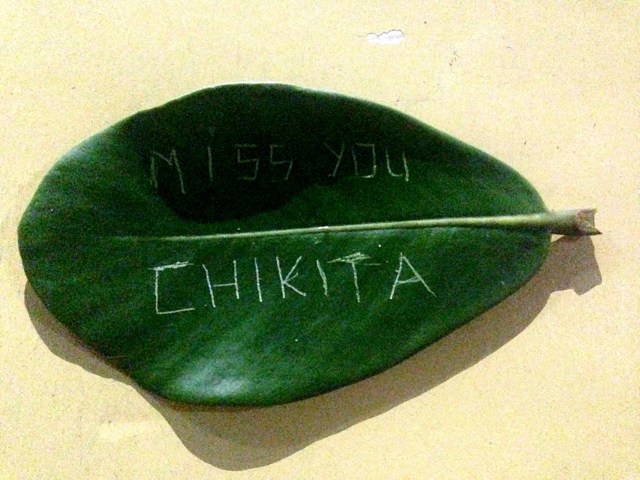
 This leave was used to write messages during the war:
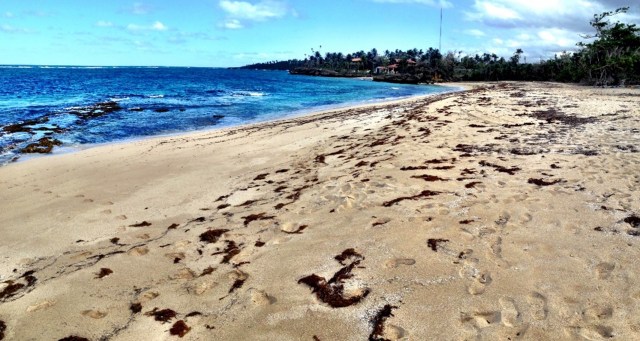
 There are lovely beaches in Eastern Cuba. The legend says this is where Christopher Columbus first stepped foot, in what he believed was India. Idiot much. His report mentions ‘a flat square mountain’ (El Yunque), and ‘the most beautiful land a human can ever see’.
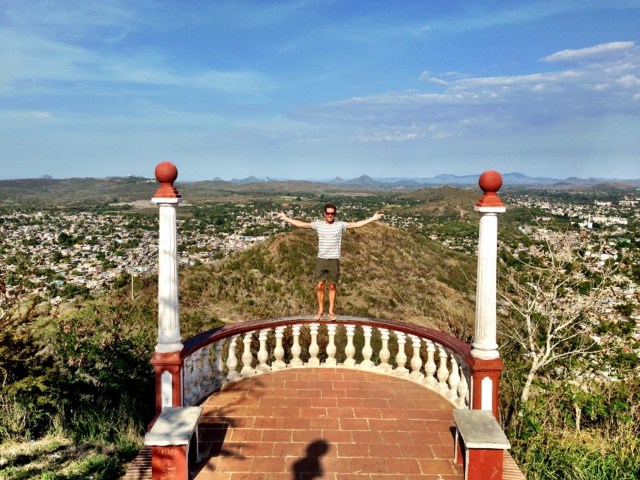
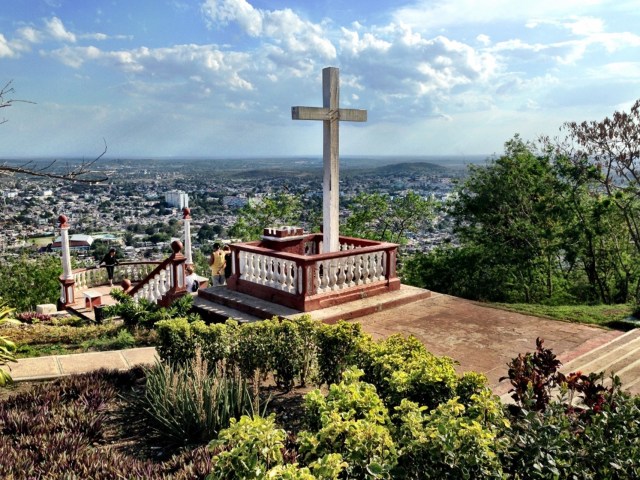
 After 3 days in Baracoa, Phillippe and I took a bumpy ride to Holguin, 3rd city of Cuba (350,000 inhabitants). I stayed there a few hours only, time to enjoy the view from Loma de la Cruz and say goodbye to Philippe. See you in Australia?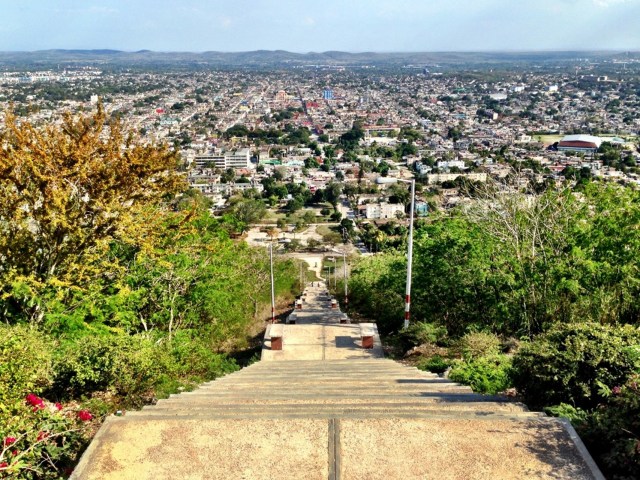
 takemethere